Press Release
press contact: carol marcusdirector, corporate communications
tel: (510) 814-7000
for pictures in 300 dpi format
send request to carol@rgb.com
![]() |
The Advent of High Resolution, High Scan Rate Digital Recording using JPEG2000 Encoder and Decoder Technology
JPEG2000 Encoder & Decoder Technology used in new Digital Media Recorders for JPEG2000 Multicast Streaming, HD Recording, HD Streaming - RGB Spectrum's DGy Real Time, High Resolution Digital Recording Systems
State-of-the-Art Encoder Decoder & Digital Recording Technology: JPEG2000
Janaury 18, 2007, Alameda, CA - JPEG2000 is an image compression standard developed by the Joint Photographic Experts Group (JPEG), part of the International Organization for Standardization (ISO). It is designed to replace existing JPEG and MPEG in many applications, offering better performance and more options.
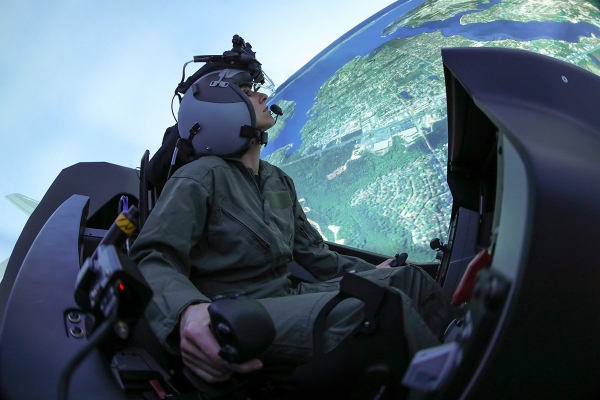
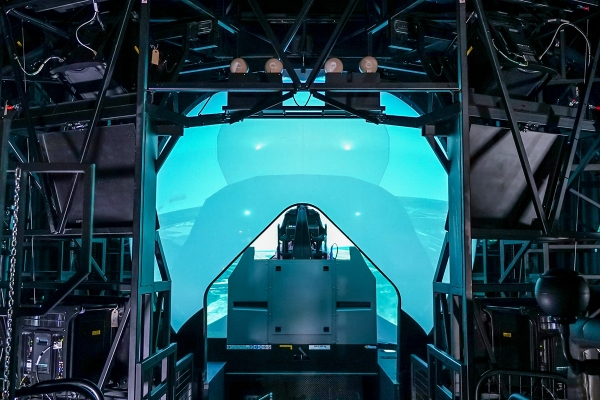
Hardware solutions based upon the JPEG2000 standard, such as RGB Spectrum's DGy digital recorder and multicast streaming system, are emerging to solve a variety of demanding, mission critical applications, e.g as a digital recorder for aircraft, vessel, and battlefield simulators, command and control, mission analysis, missile testing, telemetry, satellite and geo-spatial imaging, FLIR recording, C4ISR (Command, Control, Communications, Computers, and Intelligence, Surveillance, Reconnaissance), Weapons Systems Trainers (WST), mission brief/de-brief systems, air traffic control, medical imaging, security monitoring, and training.
JPEG2000-based hardware systems are referred to by a variety of terms: JPEG2000 Encoder/Decoder, digital media recorder, HD video recorder, JPEG 2000 recorder, high scan rate recorder, digital screen recorder, high resolution recorder, high resolution video recorder, digital video recorder, high resolution digital recorder, digital media recorder, digital screen recorder, HD video recorder, and digital video record/replay system, as well as application-specific descriptions including simulation recorder, command and control recorder, simulator recorder, and FLIR recorder.
JPEG2000 technology is based on a mathematical algorithm called wavelets to compress images, providing high compression with superior image quality, without discernable loss of detail during playback. The JPEG2000 compression rate is variable as it is dependent upon the complexity of the image to be compressed. JPEG2000 encodes each frame independently. Since each JPEG2000 frame is self-contained, recovery from a transient error occurs in the subsequent frame, providing robust, reliable digital recording and playback.
The Emergence of JPEG2000 Encoder Decoder Technology
Advanced compression techniques are replacing previous generation technology, offering enhancements like better multicast streaming capability, higher compression for a given quality, and lower latency. JPEG2000 wavelet compression technology at the forefront of real time, high resolution digital video recording, superior to other compression schemes such discrete cosine transform (DCT), vector quantization (VQ), fractal compression, and discrete wavelet transform (DWT). JPEG2000 can operate at higher compression ratios without generating the characteristic artifacts of DCT based compression schemes.
Unlike compression schemes that use DCT methods, such as MPEG-2, JPEG 2000's use of wavelet transform algorithms provides improved efficiency and reduced visibility of compression artifacts. DCT systems divide an image into blocks and code each block separately, but the wavelet transform operates over the whole image. Another advantage of JPEG 2000 is its ability to support the full raster 1920x1080 image.
JPEG2000 resolves several weaknesses inherent in other video compression formats by improving visual fidelity at high compression rates, increasing error resiliency and providing efficient lossy and lossless digital encoding coding in one single source file.
The Advantages of JPEG2000 Wavelet Compression Encoder Decoder Technology
JPEG2000 encode/decode technology produces superior image quality and performance versus other schemes. JPEG2000 handles up to 256 channels of information and is capable of describing complete alternate color models, such as CMYK, and full ICC (International Color Consortium).
JPEG2000 encoder/decoder technology advantages include:
RGB Spectrum's DGy Real Time, High Resolution Digital Recording & Multicast Streaming Systems
For many years, RGB Spectrum has been manufacturing high resolution digital recording systems. Leveraging its engineering expertise and leading edge position in this field, RGB Spectrum introduced the next generation of high scan rate, high resolution digital recorders in late 2005 with its DGy™ family. The DGy digital recorder was the first product to incorporate state-of-the-art JPEG2000 encoder decoder technology for high scan rate, high resolution digital recording.
The DGy system records or transmits high scan rate images with uncompromised quality. The DGy digital recorder performs real-time video compression and decompression. It captures, compresses, stores and plays back imagery at up to 2560 x 2048 pixel resolution. It accepts computer, radar, sonar, FLIR, X-Ray, HD and other high resolution signals, NTSC/PAL video, optional HD-SDI, and stereo audio. Recording frame rates are selectable up to 30 fps at 1280 x 1024, and correspondingly higher or lower at other resolutions.
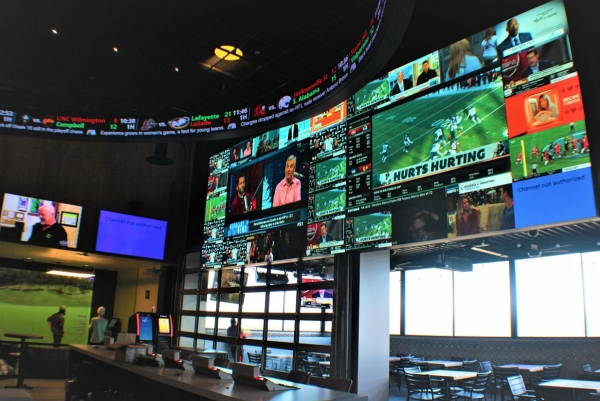
The DGy JPEG 2000 encoder/decoder technology is ideally suited for a variety of applications. Military applications include simulation, command and control, mission analysis, missile testing, telemetry, satellite and geo-spatial imaging, FLIR recording, C4ISR (Command, Control, Communications, Computers, and Intelligence, Surveillance, Reconnaissance), Weapons Systems Trainers (WST), mission brief/de-brief systems, and air traffic control. Other applications include medical imaging, security monitoring, training, and pre-programmed presentations. Digital screen recorders are increasingly being used for these and other applications requiring real-time high-resolution recording. High-resolution computer displays containing a combination of complex graphics and sensor information are ubiquitous in modern command and control rooms, including naval vessel and tactical operations centers (TOCs) environments.
DGy 200 and 201 models offer internal storage available as a single or dual drive system, one fixed and one removable. The DGy 300 and 301 models support an external storage system via a dedicated network connection. Record time is a function of disk size, input resolution, image compression and frame rate. For 1280 x 1024 resolution at 30 fps, record time would be 26 hours with the standard dual disk drives.
The base level DGy can be switched between record and replay. Various models also support optional concurrent record and replay, which allows review of prior recordings while live recording continues.
Remote playback on a Windows PC is supported using a JPEG2000 plug-in to the standard Windows Media Player. This playback ability applies to recordings transferred over the network, replayed from an external storage system or transferred physically via a removable disk or other storage media.
The DGy digital recorders also offer additional leading edge features, including event marking, instant random access, and built-in web-based graphical user interface. DGy recordings are time stamped using an internal clock and can also be time synchronized to external IRIG-B time code or Network time Server (NTS) sources. Multiple DGy units can be interconnected to support simultaneous, synchronized recording of multiple sources. Recordings can be replayed fully synchronized at actual speed for a correlated view of all pertinent visuals and data in their exact real time sequence.
Recording Transmission & Digital Video Distribution
A common application is to record mission simulations and transfer the recordings from the simulation command room or IOS to the debrief room via network communications for After Action Review (AAR) debriefing. DGy JPEG2000 digital recording systems offer a versatile array of recording transmission capabilities. The DGy supports file transfer to and from a remote computer or file server using standard ftp protocol. A variety ofDGy models offer multicast and unicast video streaming as well as transmission to a Network File Server (NFS).
Multicast & Unicast Real Time Video Streaming
The demand for distribution of real time information remotely is driving the utilization of streaming within LAN and WAN network environments. Attempts have been made to use video streaming and computer desktop capture systems to reproduce images across networks, but these methods provide visual performance that either decimates fine image detail or compromises the frame rates and introduces systemic delays. DGy JPEG2000 high resolution video streaming technology is the ideal solution for digital video distribution.
RGB Spectrum's DGy high-resolution, real-time streaming technology provides a platform independent means for organizations to capture and stream high-resolution images across networks in real-time and in full fidelity. This capability allows organizations to capture, stream and record highly detailed computer and video applications, maintaining all of the original image detail, allowing individuals to view it simultaneously with the same visual quality as broadly as their network infrastructures can reach. The DGy JPEG2000 encoder/decoder technology offers low latency video streaming and lossless quality over gigabit Ethernet. JPEG2000 organizes the data stream into packets and layers, which describe all the attributes of the frame within each frame transmission for optimal fidelity and reliability.
Sample Application: The high resolution DVI or RGB output of an image generator can be encoded and streamed across a network to one or more remote DGy decoder units which can display an exact replica of the imagery in real-time. Audio is synchronized to the image content. A large network of encoders and decoders could be configured for broad sharing and viewing of imagery creating a networked video solution. Streamed images can also be recorded to hard disk storage on the network. They can be immediately streamed back from disk as required.
RGB Spectrum® is a leading designer and manufacturer of videographic and multimedia hardware subsystems. Products include the View™ family of video windowing systems, the RGB/Videolink® line of scan converters, the DGy™ digital recording system, and SuperWall™, ComputerWall® and MediaWall® multi-screen display controllers. RGB Spectrum is based in Alameda, California, and can be reached at 510-814-7000 and on the internet at http://www.rgb.com.